Description
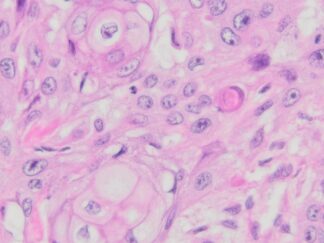
The Deparaffinization Solution is optimized for removing paraffin prior to DNA or RNA purification from formalin-fixed, paraffin-embedded (FFPE) tissue sections. After addition to an FFPE sample, the solution remains with the sample during Proteinase K digestion. It is not necessary to pellet the FFPE sample after adding the Deparaffinization Solution or to remove the paraffin-containing supernatant.
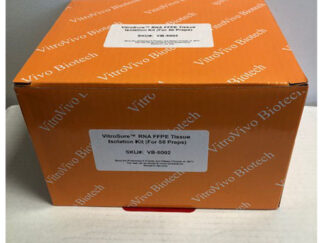
VitroSure™ Deparaffinization Solution is non-odorous and easy to use. It is compatible with the VitroSure™ DNA/RNA Isolation Kits (VB-5001, VB-5002 and VB-5003) for FFPE samples, providing a convenient and efficient workflow for nucleic acid extraction.
Content
| Deparaffinization Solution | 15 ml |
Storage
Store at room temperature.
Typical Procedures
- Use a scalpel to trim excess paraffin off the sample block.
- Cut up to 2-6 sections with a microtome, each 5–10 µm thick. The section number for each sample depends on the tissue size. Discard the first 2–3 sections if the sample surface has been exposed to air.
- Place the sections immediately in a 1.5 or 2 ml microcentrifuge tube
- Add Deparaffinization Solution: for 2-6 sections or one 20 µm section, add 320 µl Deparaffinization Solution; for more sample material, add 640 µl Deparaffinization Solution.
- Vortex vigorously for 10 s, and centrifuge briefly to bring the sample to the bottom of the tube.
- Incubate at 56°C for 3 min, then allow to cool at room temperature (15–25°C), and centrifuge at full speed for 2 min.
- Carefully remove the supernatant by pipetting without disturbing the pellet. Carefully remove any residual Deparaffinization Solution using a fine pipette tip.
- Keep the lid open and incubate for 10 min at 37°C to dry the pellet. Proceed to the next step for DNA/RNA isolation.
User Manual and Material Safety Data Sheet (MSDS) (PDF )
VB-5009 Deparaffinization Solution User Manual
VB-5009 MSDS
Note
This product is intended for research purposes only. This product is not intended to be used for therapeutic or diagnostic purposes in humans or animals.
Precautions
Handle with care. Avoid contact with eyes, skin and clothing. Do not ingest. Wear gloves.